Swedish massage · Downtown Asheville · 60 or 90 minutes

Long strokes, warm hands, and nowhere to be.

Swedish massage in downtown Asheville, and not a separate service. It is Deep Restorative Massage™, the method behind every session in this room, read as Swedish: settle the nervous system first, then long, warm, unhurried strokes at the speed the skin is tuned to, broad before specific, lighter and steadier by default. The first massage of your life, or the one where you finally switch off. Gentle is not the same as less.

★★★★★ 5.0 on Google · 143 reviews Official massage partner of The Restoration Hotel 35 Haywood St · Suite 203
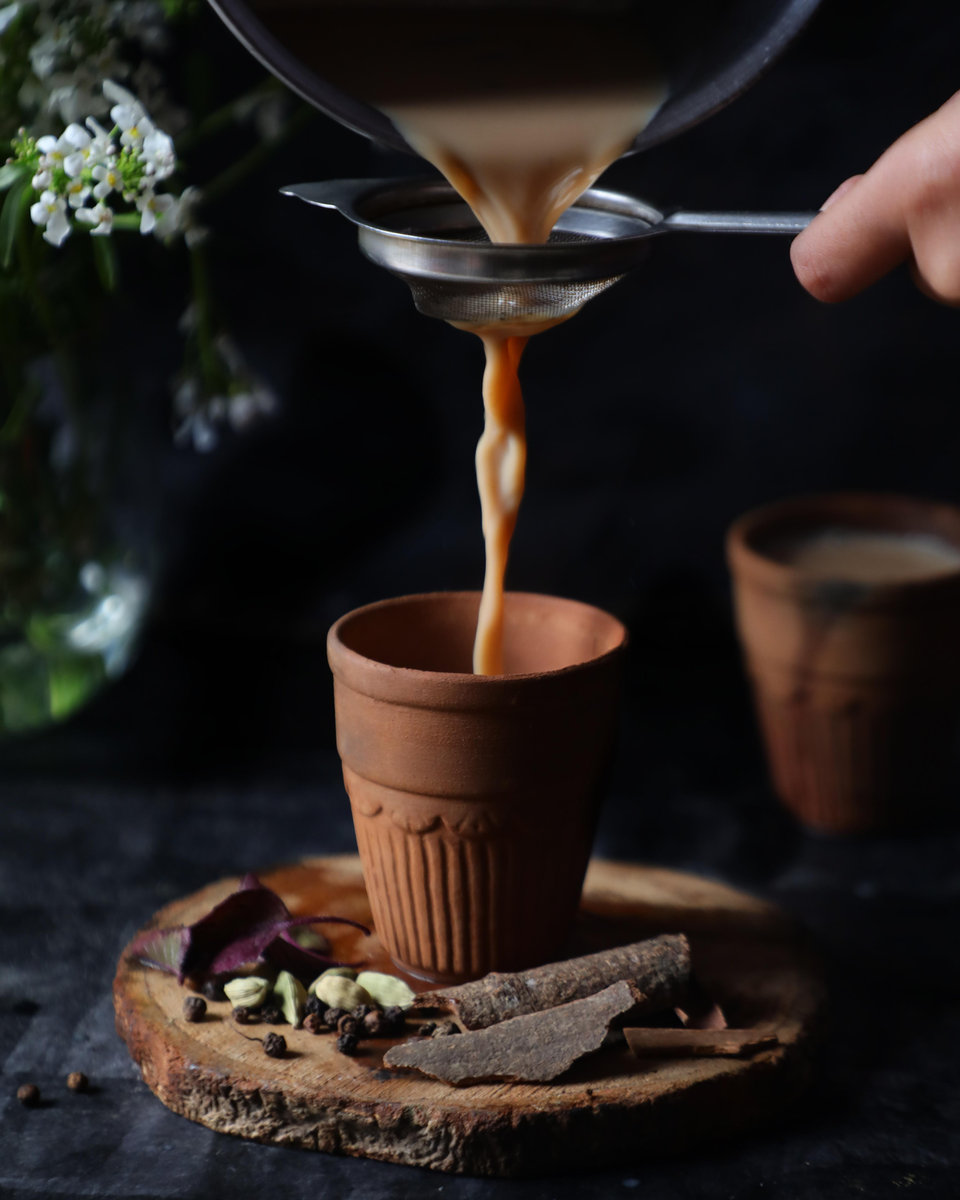
Caffeine-free masala chai poured through a strainer into a terracotta cup
The welcome pour. Caffeine-free, and yours to choose.
I

Arrive

Come a little early. You are welcomed at the door, your coat is taken, and a pour is offered: the house masala chai, which is caffeine-free, or herbal tea, or simply water. If this is your first massage, say so; the door is the easiest place to say it, and it changes the pace of everything after. Nothing hands-on happens until you have arrived, and arriving takes a few minutes longer than climbing the stairs.

The reception lounge: rattan sofa under an abstract painting, a brass arc lamp, two leather chairs
The lounge, one flight above Haywood Street.
II

The conversation

A few minutes in the lounge before the table: what you want from the hour, what a good massage has felt like before, where you carry the week, and what you would rather was left alone. Then the practical questions: silence or notes, whether you tend to fall asleep and would like to, the pressure you prefer as a starting point. You undress to your own comfort and are draped the whole session; only the area being worked is uncovered.

Everything about the session is decided here, so nothing on the table is a surprise. If something is newly injured, swollen or inflamed, say so, and the session adapts around it.

III

The work, as Swedish

Deep Restorative Massage™ read as Swedish is the vocabulary most of the world learned massage in: long strokes that run the length of a limb, kneading that lifts and lets go, a rhythm that repeats until the body stops waiting for the next thing. Here those strokes are done slowly, at the speed the skin is tuned to, broad before specific, with warm oil and warm hands, and the pressure lighter and steadier by default. It is still read continuously, in your breath as much as your words, and it goes firmer or softer anywhere you like without you having to manage it. Nothing hurries. The strokes are not the whole session; they are the door to the settling, and the settling is the point.

Both hands holding a guest's hand and wrist, the arm raised from the table
Down the forearm and into the hand, one long stroke at a time
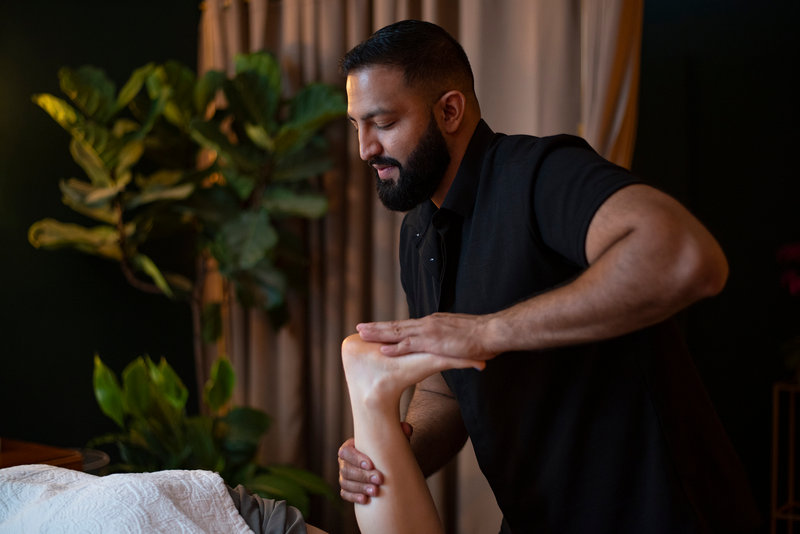
Arash holding a guest's raised leg at the ankle and calf, eyes on the work
The legs, long and slow, for a body that stands all day
Both thumbs pressed into the arch of a guest's foot
The feet, where the whole day lands
Three warmed stones resting along a guest's spine
Warmed stones, the length of the spine.
IV

Warmth

Warmth comes first here and stays. The oil is warmed between the palms to the temperature of skin before it touches you, because the nerve fibers that answer a slow stroke fire most at that temperature and less when the touch is cooler or hotter. In the 90, the jade stone ritual lays warmth along the back, and steamed towels and a weighted thermal layer rest on the parts of you that are resting. Warmth, weight and quiet are the signals a nervous system reads as safety, and safety is what lets a body stop holding itself up. Every ritual beyond the massage itself is optional, and each is offered rather than imposed.

V

The close

The last minutes are as still as the first. A few resonant notes close the session, then quiet. You come up slowly, with a hand if you want one, and there is no hurry out the door: water, a moment to sit, the door held. Most guests feel slower and quieter for the rest of the day, and some sleep early. Soreness after Swedish work is unusual; if anything feels unusual afterward, tell us. Set aside about two hours for the 90 and about ninety minutes for the 60.

The room, between guests.
Deep Restorative Massage™ · read as Swedish

Swedish describes the strokes. This method describes an order.

Swedish is not a separate item on the menu here. Every session in this room is Deep Restorative Massage™, Arash's method: settle the nervous system first, then the work. Asking for Swedish changes how the third step is done, and it is the read the first two steps were built for.

1

Control the environment

Stays. One private room, one guest, one door that closes. Low, warm light, living plants, the sound of water, a warm table and soft linens.

Reads as. The room is the first stroke. The table is warm before you lie on it, the oil is at skin temperature before it touches you, and the light is low enough that your eyes can close without deciding to.

2

Let the nervous system arrive

Stays. Nothing hands-on happens first. A pour if you would like one, then a real conversation before the table.

Reads as. What the conversation asks: what switching off means for you, silence or notes, the pressure you tend to prefer, and whether you would like to sleep. A body that arrives already half settled needs no persuading; the strokes finish what the room began.

3

Then the work

Stays. Slow, sustained pressure the body meets instead of fighting, read continuously. Warmth to give the calm somewhere to land, and a close in sound and stillness.

Reads as. Long, warm, rhythmic strokes at the speed the skin is tuned to; broad before specific; lighter and steadier by default, firmer where you ask. Hands only, unless you ask for more. Gentle is not the same as less.

Same welcome, same conversation, same close. The same method, read as Swedish.

Every ritual beyond the massage itself is optional.

The method, in full →

The research

What the science supports, in plain words.

Swedish massage is the most studied kind there is, which is useful, because it means the claims can be checked. What the trials say is quieter than the folklore and better than it: a calmer body within the hour, less anxiety over a course of sessions, and, for a stubborn back, the same relief that deeper work gives. Each finding below is linked so you can read it yourself, and where the evidence is thin, this page says so.

01

Gentle did not lose to deep, for chronic back pain.

In the largest trial of its kind, 401 people with chronic low back pain received relaxation massage, which is the Swedish vocabulary, or structural massage, or usual care. At ten weeks both massage groups had improved about equally, 2.9 and 2.5 points better than usual care on the standard disability scale, and the benefit lasted at least six months. The authors found no clinically meaningful difference between the two kinds of massage. Gentle is not the same as less.

  • Cherkin DC, et al. (2011). A comparison of the effects of 2 types of massage and usual care on chronic low back pain: a randomized, controlled trial. Annals of Internal Medicine. PubMed
02

Slow, and at the temperature of skin.

A class of nerve fibers in the skin answers gentle stroking most strongly at one to ten centimeters a second, the speeds people rate as most pleasant. The same fibers fire best when the stroking is at the skin's own temperature and less when it is cooler or warmer, and pleasantness tracked their firing only at that temperature. That is why the strokes here are slow, and why the oil is warmed between the palms before it touches you.

  • Löken LS, et al. (2009). Coding of pleasant touch by unmyelinated afferents in humans. Nature Neuroscience. PubMed
  • Ackerley R, et al. (2014). Human C-tactile afferents are tuned to the temperature of a skin-stroking caress. Journal of Neuroscience. PubMed
03

Within the hour, the calmer side takes more of the load.

Across 50 controlled studies with 2,147 participants, soft-tissue techniques were associated with a lower heart rate and a rise in the heart-rate-variability marker that tracks the parasympathetic, calmer side, with no consistent effect on blood pressure; the authors rate the certainty low to moderate. In a study of 60 healthy women, quiet rest raised that marker on its own, and two kinds of massage raised it more. Short-term, measurable, and honest about its size.

  • Villani G, et al. (2026). Biological effects of technique-specific manual therapy in healthy individuals and people with musculoskeletal disorders: a systematic review with meta-analysis. Journal of Manual & Manipulative Therapy. PubMed
  • Meier M, et al. (2020). Standardized massage interventions as protocols for the induction of psychophysiological relaxation in the laboratory: a block randomized, controlled trial. Scientific Reports. PubMed
04

The room does part of the work.

68 people with generalized anxiety disorder were given ten sessions over twelve weeks of therapeutic massage, of thermotherapy, or of simply resting in a relaxing room. All three groups improved by a clinically meaningful amount and kept the gains at six months, and massage was not better than the other two; the authors concluded that a general relaxation response was doing most of the work. This page treats that as instruction rather than bad news. The room, the warmth and the quiet are part of the method here, not decoration around it.

  • Sherman KJ, et al. (2010). Effectiveness of therapeutic massage for generalized anxiety disorder: a randomized controlled trial. Depression and Anxiety. PubMed
05

For a worried mind, a course of it.

In a small proof-of-concept trial, 47 adults with generalized anxiety disorder who were not otherwise being treated received either Swedish massage or light touch twice a week for six weeks. Anxiety scores fell 11.7 points with Swedish massage against 8.4 with light touch, a difference the study found from the third week on. One site, forty evaluable people, stated here as a start rather than a conclusion.

  • Rapaport MH, et al. (2016). Acute Swedish Massage Monotherapy Successfully Remediates Symptoms of Generalized Anxiety Disorder: A Proof-of-Concept, Randomized Controlled Study. Journal of Clinical Psychiatry. PubMed
06

One session, and a rhythm of them.

Across 37 randomized studies, a single massage lowered state anxiety, blood pressure and heart rate but not pain measured right afterward; a course of sessions reduced pain measured later, and its largest effects were on trait anxiety and depression. In 380 people with advanced cancer, massage eased pain and mood more than simple touch right after each session, and the difference did not last between sessions. Relief you can feel today; change that needs a rhythm.

  • Moyer CA, Rounds J, Hannum JW (2004). A meta-analysis of massage therapy research. Psychological Bulletin. PubMed
  • Kutner JS, et al. (2008). Massage therapy versus simple touch to improve pain and mood in patients with advanced cancer: a randomized trial. Annals of Internal Medicine. PubMed
07

How much, and how often.

125 adults with osteoarthritis of the knee were given eight weeks of standardized Swedish massage at thirty or sixty minutes, weekly or twice weekly, or usual care. The sixty-minute groups improved 24 points on the standard arthritis scale against 6 for usual care at eight weeks; more time per week added nothing beyond a weekly hour, and the effect had faded by 24 weeks. A weekly hour was the dose that mattered, and it wore off when it stopped.

  • Perlman AI, et al. (2012). Massage therapy for osteoarthritis of the knee: a randomized dose-finding trial. PLoS ONE. PubMed
What we do not claim

Only what the evidence will carry.

Swedish massage here does not flush toxins, lower your cortisol or boost your immune system, and it does not improve circulation in the way the phrase is usually meant. The Swedish strokes themselves, tested by name, did not raise blood flow to the muscle in healthy people, while a light contraction did; after hard exercise, massage slowed the clearing of lactate rather than speeding it. The cortisol claim, checked across every controlled study, comes out close to zero. What the evidence does carry is quieter and real: a calmer nervous system within the hour, less anxiety over a course of sessions, and, for a stubborn back, the same relief that deeper work gives.

Moyer CA, et al. (2011), Journal of Bodywork and Movement Therapies · PubMed  ·  Shoemaker JK, et al. (1997), Medicine & Science in Sports & Exercise · PubMed  ·  Wiltshire EV, et al. (2010), Medicine & Science in Sports & Exercise · PubMed

Guest words
"The most relaxing massage I have had in a very long time. Arash has very calming hands while still knowing the target spots."Julianne Beck · Google · March 2025
"While the option was there to have him adjust pressure levels, I didn't have to tell him once."Mrs. Spinner · Google · April 2025

Guests' own words, from their public Google reviews. Every body is different, and so is every session.

Sessions

Two ways in. Both at the speed the skin prefers.

Questions
Is Swedish massage a separate service?

No. It is Deep Restorative Massage™, the same method behind the 90 and the 60, read as Swedish. You reserve the 90 or the 60 as anyone would and say that you would like the gentler, unhurried read, or simply that you want to switch off. The session is built from there.

How light is it?

Lighter and steadier than deep work by default, and still read continuously in your breath as well as your words. It goes firmer where you ask and softer where you would rather it did, without you having to manage it. Most guests say the pressure once, in the conversation, and never again.

Is this a good first massage?

It is the one to choose. Nothing hands-on happens until you have arrived and talked, you undress to your own comfort and are draped the whole session with only the area being worked uncovered, and the pace is set by your body rather than a clock. If it is your first, say so at the door.

Do I have to talk, or stay awake?

Neither. Some guests want silence, some want to give notes the whole way through, and some fall asleep, which is welcome. You say which in the conversation, and it is honored on the table.

Do you use cupping or the instruments in a Swedish session?

Not by default. A Swedish session here is hands only. Cupping and myofascial scraping with stainless steel instruments are available in any session when your body calls for them; your therapist will ask first, nothing is added without your yes, and nothing is charged for it.

Will I be sore afterward?

Soreness after Swedish work is unusual. Most guests feel slower and quieter for the rest of the day, and some sleep early. If anything feels unusual afterward, tell us.

How often should I come?

The trials that measured it used a weekly hour for eight weeks, and the benefit faded once the sessions stopped, so the honest answer is a rhythm rather than a one-off. How often is yours to set. The conversation is where it gets worked out, and a rhythm that fits your life beats one that does not.

The 60 or the 90?

The 90 if you can. Long strokes need the whole body and the time to be slow, and the 90 leaves room for both without cutting the close short. The 60 settles one region, usually the back, neck and shoulders, rather than everywhere.

Slow, warm and unhurried, one flight up.

Rated 5.0 on Google across 143 reviews. Reservations online or by phone.

Reserve the 90 Reserve the 60