
The Method

Deep Restorative Massage™ starts with the nervous system.

Arash Bains built this method on one observation. The same hands and the same techniques produced very different results, depending on the state of the person on the table. So every session begins by changing that state, and only then does the deep work begin.

★★★★★ 5.0 on Google · 140 reviews Official massage partner of The Restoration Hotel 35 Haywood St · Suite 203
Arash warming oil between his palms before the work begins
The same hands, every session.
I

The observation

Before Arash Massage, Arash worked in luxury, high-end spas, giving a high volume of massages with the same clinical methods and the same therapeutic inputs every time. The results were not the same. Some guests left transformed. Others received identical work and left much as they arrived.

Technique was not the variable. Arash had been mentored in advanced therapeutic bodywork by a physiotherapist with a doctorate, and the work itself was consistent. What differed was the person on the table: how settled, or how braced, they were when the work began.

The reception lounge: rattan sofa under an abstract painting, a brass arc lamp, two leather chairs
Where every session begins.
II

The hypothesis

His hypothesis was simple to state and demanding to practice: a nervous system on alert cannot fully receive bodywork. When the body senses threat, it protects itself. Muscles guard, pain is felt more sharply, and deep pressure is met with resistance. When it senses safety, the calmer, parasympathetic side of the nervous system, the state often called rest and digest, carries more of the load, and the same pressure lands differently.

So he tested it, session after session. He changed the room, the pace and the first minutes of every visit, then watched what happened to the work. The outcomes changed, and they kept changing. That practice became Arash Massage.

III · The method

Three steps, always in this order.

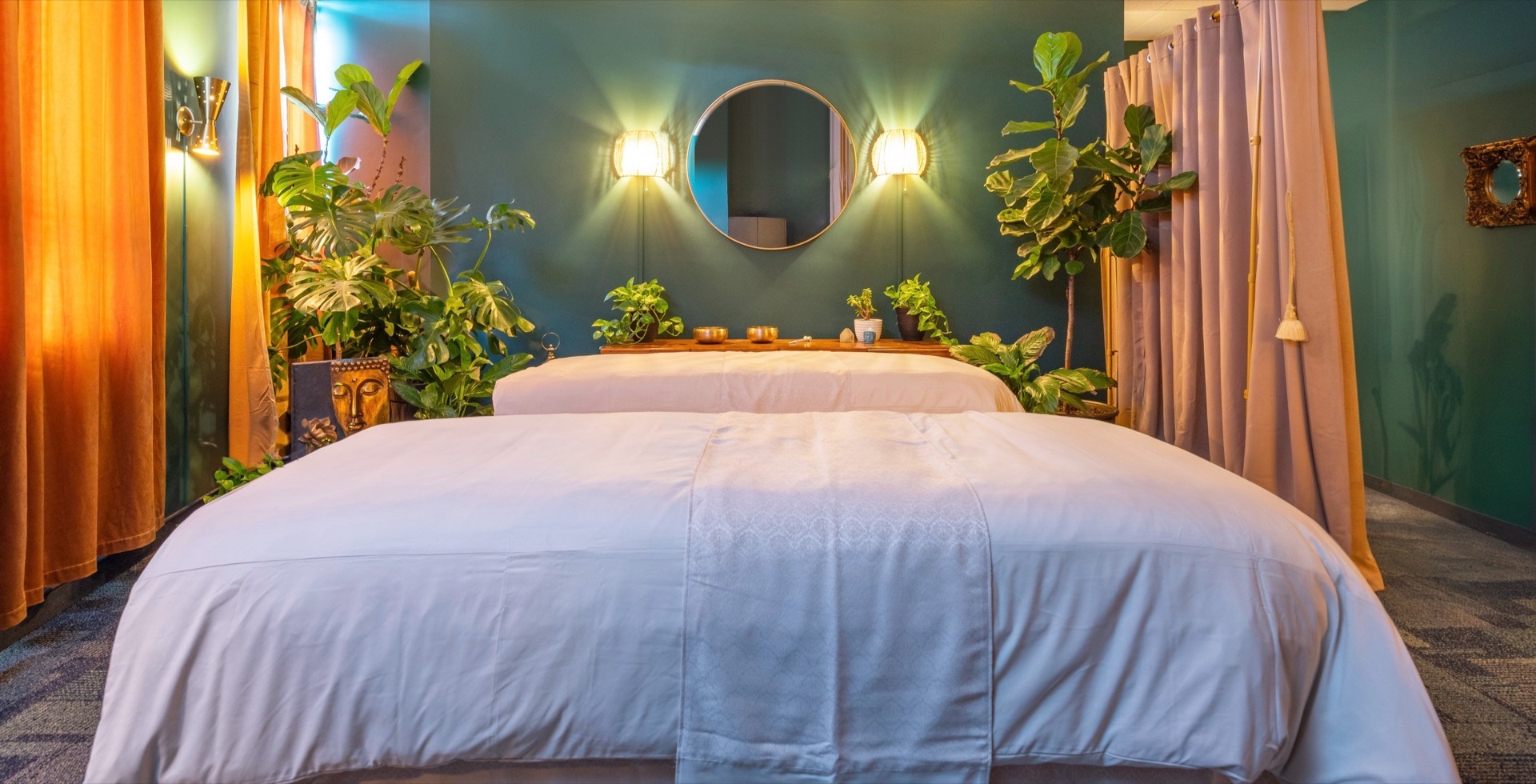
The treatment room at Arash Massage: the round mirror, warm sconces and a prepared table
1

Control the environment

One private room, one guest, one door that closes. Low, warm light, living plants, the sound of water, no hallway noise and no clock in view. A heated table, weighted linens and warmed oil without perfume. Every input is chosen to tell the body it is safe.

Caffeine-free masala chai poured through a strainer into a terracotta cup
2

Let the nervous system arrive

Nothing hands-on happens first. A pour if you would like one, then a real conversation about what your body is carrying, where it holds and how much pressure feels right. The pace slows, and breathing tends to slow with it.

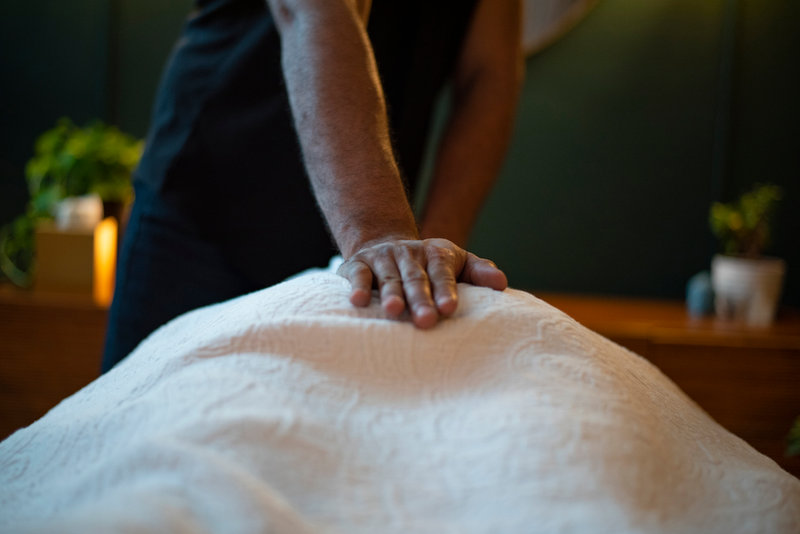
A flat palm pressed between the shoulder blades through the quilted drape
3

Then the deep work

Once the body stops bracing, the work can go deep: slow, sustained pressure the body meets instead of fighting, adapted region by region to deep tissue, Swedish or prenatal work. You set the ceiling and it is read continuously. Warmth, weight and a close in sound and stillness give the calm somewhere to land.

Deep is not the same as painful. That distinction is the whole method.

Every ritual beyond the massage itself is optional.

IV · The research

What the science supports, in plain words.

No study has tested this exact sequence; the method comes from Arash's practice. What published research does show is each idea the method rests on. These are the papers it leans on, linked so you can read them yourself.

01

Massage calms the body, measurably.

Across 50 controlled studies, soft-tissue work such as massage was linked to a short-term drop in heart rate and a rise in heart rate variability, a marker of the calmer, parasympathetic side of the nervous system. The effect is short-term, and the authors rate their certainty low to moderate.

  • Villani G, et al. (2026). Biological effects of technique-specific manual therapy in healthy individuals and people with musculoskeletal disorders: a systematic review with meta-analysis. Journal of Manual & Manipulative Therapy. PubMed
02

The setting does part of the work.

In a randomized study of 60 healthy women, quiet rest alone raised a parasympathetic marker of heart rate variability, and a short massage raised it further. In a trial for generalized anxiety, massage and resting in a calm room with music and breathing guidance improved by similar amounts, which points to the setting itself.

  • Meier M, et al. (2020). Standardized massage interventions as protocols for the induction of psychophysiological relaxation in the laboratory: a block randomized, controlled trial. Scientific Reports. PubMed
  • Sherman KJ, et al. (2010). Effectiveness of therapeutic massage for generalized anxiety disorder: a randomized controlled trial. Depression and Anxiety. PubMed
03

A body under threat feels more, and guards.

Emotional state changes how the brain processes pain, and anxiety tends to amplify it. Mental stress raises muscle activity across the upper back, and simply expecting pain shifts trunk muscles into a protective, stiffening pattern. That guarding is what deep work runs into.

  • Bushnell MC, Ceko M, Low LA (2013). Cognitive and emotional control of pain and its disruption in chronic pain. Nature Reviews Neuroscience. PubMed
  • Lundberg U, et al. (1994). Psychophysiological stress and EMG activity of the trapezius muscle. International Journal of Behavioral Medicine. PubMed
  • Moseley GL, Nicholas MK, Hodges PW (2004). Does anticipation of back pain predispose to back trouble? Brain. PubMed
04

Hands-on work acts through the nervous system.

Current models describe the effects of manual therapy as largely neurological, shaped by the person, the practitioner and the environment. In one massage study, what people were led to expect changed their pain sensitivity during the work itself.

  • Bialosky JE, et al. (2018). Unraveling the Mechanisms of Manual Therapy: Modeling an Approach. Journal of Orthopaedic & Sports Physical Therapy. PubMed
  • Wilson AT, et al. (2023). Expectations affect pain sensitivity changes during massage. Journal of Manual & Manipulative Therapy. PubMed
05

Skin is wired for slow, warm touch.

Dedicated nerve fibers in the skin respond best to slow stroking at skin temperature, the kind of touch people rate most pleasant.

  • Löken LS, et al. (2009). Coding of pleasant touch by unmyelinated afferents in humans. Nature Neuroscience. PubMed
  • Ackerley R, et al. (2014). Human C-tactile afferents are tuned to the temperature of a skin-stroking caress. Journal of Neuroscience. PubMed
06

Slow breathing moves the body toward calm.

A meta-analysis of 223 studies found that slow breathing raises parasympathetic heart rate variability during practice and shortly after.

  • Laborde S, et al. (2022). Effects of voluntary slow breathing on heart rate and heart rate variability: A systematic review and a meta-analysis. Neuroscience & Biobehavioral Reviews. PubMed
07

Anxiety eases, and a rhythm of sessions does more.

A meta-analysis of 37 randomized studies found that single sessions lowered anxiety, heart rate and blood pressure, and that the largest effects came from a course of sessions.

  • Moyer CA, Rounds J, Hannum JW (2004). A meta-analysis of massage therapy research. Psychological Bulletin. PubMed
08

Calm-focused massage holds its own on real pain.

In a 401-person randomized trial for chronic low back pain, relaxation massage improved function as much as structural massage, and the benefits lasted at least six months.

  • Cherkin DC, et al. (2011). A comparison of the effects of 2 types of massage and usual care on chronic low back pain: a randomized, controlled trial. Annals of Internal Medicine. PubMed
What we do not claim

Only what the evidence will carry.

Massage does not detox the body or flush out lactic acid. Once studies compare it against proper controls, the evidence that it lowers cortisol is weak. And the method itself is Arash's, drawn from practice; no trial has tested it as a sequence. We would rather tell you exactly what the research supports than borrow claims it does not.

Moyer CA, et al. (2011), Journal of Bodywork and Movement Therapies · PubMed  ·  Wiltshire EV, et al. (2010), Medicine & Science in Sports & Exercise · PubMed

Guest words
The room"He created a soothing and safe environment that helped me unwind completely."Tia Ward · Google · November 2024
The conversation"Arash took the time to converse before the massage, discussing my expectations/past massage experiences, the muscles I would like focused on, and even my mental space for the day."Ashley · Google · February 2025
The result"…I had come in with chronic shoulder pain and it has improved since my massage!"Angelica A · Google · August 2026
The difference"There's spa work and then there's body work and if you want your pain to go away, come see Arash."Zane Gibby · Google · June 2024

Guests' own words, from their public Google reviews. Every body responds differently.

Questions
Is Deep Restorative Massage™ the same as deep tissue?

No. Deep tissue describes a pressure. Deep Restorative Massage™ describes an order: settle the nervous system first, then work as deep as your body will genuinely allow. The same method can read as deep tissue, Swedish or prenatal work, depending on what your body asks for that day.

Will it hurt?

Deep is not the same as painful. You set the ceiling on pressure and it is read continuously, not requested. A body bracing against pain is a body that is not receiving the work.

Why does the conversation come before the massage?

Because the first minutes are part of the method. They let your body arrive before it is asked to receive anything, and they tell your therapist where you hold, what you need and what you would rather leave out.

Is the method proven?

It is Arash's method, built from years of hands-on observation, and no study has tested this exact sequence. Each idea it rests on is supported by published research, linked on this page so you can read it yourself.

Which session gives the method the most room?

The 90. It leaves time to arrive, time for the deep work and time for the close. The 60 keeps the same order in a tighter arc.

Settle first. Then the work.

Rated 5.0 on Google across 140 reviews. Reservations online or by phone.

Reserve the 90 See the 60